James Allen sells loose diamonds, engagement ring settings, wedding bands and fine jewelry online. Its best-known feature is the magnified 360-degree video of each stone, which lets you inspect the actual diamond rather than a stock photo.
A good James Allen order comes down to three choices: the stone, the setting and the size. Get those right and the rest is paperwork and delivery.
Reading the 4Cs on a James Allen listing
Every James Allen diamond lists cut, color, clarity and carat. Cut matters most for sparkle, so many buyers start with the top cut grades and then trade down on the other three. A well-cut stone often looks larger than a poorly cut one of the same weight.
Color runs on a letter scale from D downward. In a yellow or rose gold setting, a near-colorless grade usually looks white enough. In platinum or white gold, slight warmth is easier to see, so many buyers stay a little higher on the scale.
Clarity is where the James Allen videos earn their keep. A stone graded a step lower can still be eye-clean, and you can check that yourself by spinning the video. Paying for a flawless grade you cannot see is the most common way to overspend.
Carat weight and the price jumps
Prices tend to jump at round weights such as 1.00 carat. A stone just under that mark can look almost identical on the hand. Filtering James Allen search results by carat range makes these gaps easy to spot.
Shape changes the math too. Round brilliants usually cost the most per carat, while ovals, pears and emerald cuts can look larger for the money. Elongated shapes also flatter the finger.
Check the certificate on each James Allen listing. Look at which lab graded the stone and read the full report, not just the headline grades.
Lab-grown or natural at James Allen
James Allen sells both lab-grown and natural diamonds. A lab-grown stone is chemically a diamond, and it usually costs far less for the same size and grade. Natural stones carry rarity and, for some buyers, meaning.
Resale is the practical difference. Treat any diamond as a purchase for wearing rather than an investment, and check the current James Allen upgrade policy for each type.
If budget is fixed, a lab stone lets you choose a bigger or better-graded diamond. If tradition matters more, spend on a natural stone and keep the setting simple.
Picking a James Allen setting
James Allen settings range from plain solitaires to halos, pavé bands and three-stone designs. Metal choices typically include platinum and several golds. Platinum is dense and hard wearing, while gold is lighter and often cheaper.
A halo makes the center stone look bigger, which can let you buy a smaller diamond. Pavé looks rich but adds small stones that can need attention over the years.
Think about the wedding band early. Some James Allen settings sit low or curve, so check that a straight band will sit flush, or choose a matching band.
Getting the ring size right
Ring size is the detail that causes the most James Allen returns and resizes. Have a jeweler measure the finger if you can. Fingers swell in heat and shrink in cold, so measure at a normal temperature.
If the ring is a surprise, borrow a ring the wearer already uses on the same finger and have it measured. Wide bands usually need a slightly larger size than thin ones.
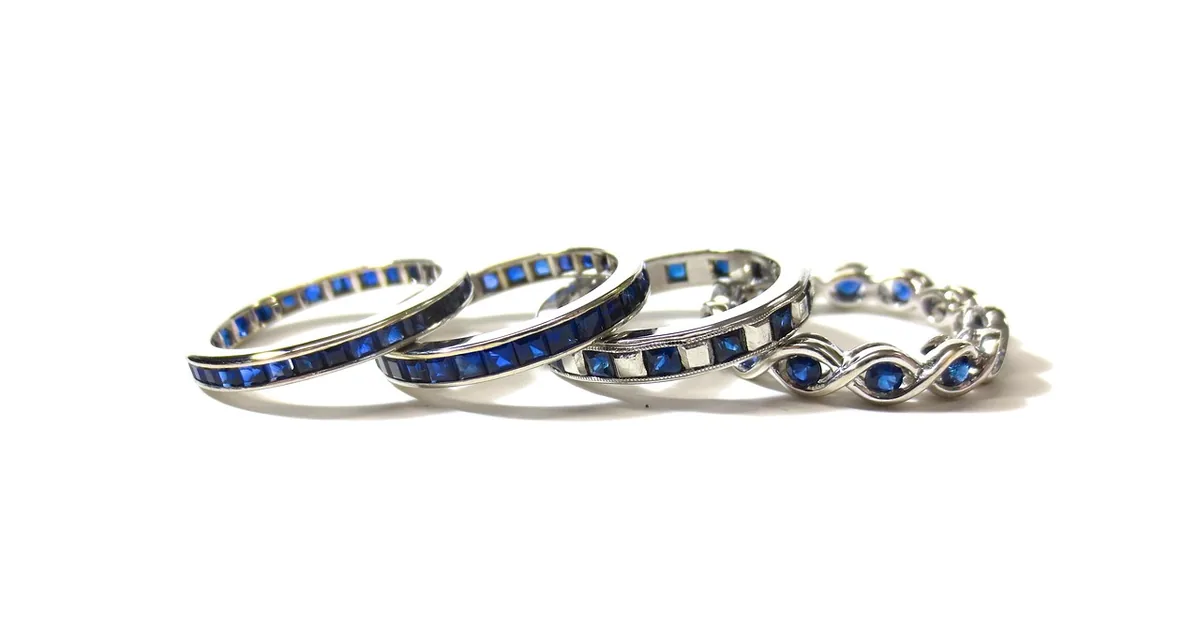
Some styles, such as full eternity bands, are hard or impossible to resize. Check the James Allen resizing terms for your chosen setting before you pay.
Delivery, returns and care
James Allen ships insured and usually needs a signature. Plan for someone to be home, or ask about holding it at a carrier location. Build lead time for custom settings into any proposal date.
Check the current James Allen return window and whether engraving or resizing affects it. Keep all packaging and the certificate until you are sure.
For care, clean the ring with warm water, mild soap and a soft brush. Have prongs checked by a jeweler once a year so the stone stays secure.
Where the James Allen savings are
On a large James Allen order, the 30% code is the one to try first, since a percentage scales with the price. The 25% code is the backup if the first one is rejected at checkout.
The $50 code makes sense only on small orders, such as a simple band or earrings. Once the basket passes a couple of hundred dollars, a percentage code saves more.
Codes may not cover every James Allen item, and some exclude certain stones or sale pieces. Apply the code before entering payment and confirm the discount appears in the total.
Only one code usually applies per order. Test each on your exact basket and keep the one that gives the lowest total.
Common questions
Can I see the actual James Allen diamond before buying?
Yes, each listed stone has its own magnified video. Use it to check inclusions and how the stone reflects light.
Is a lab-grown James Allen diamond real?
Yes, it is a real diamond grown in a lab. It usually costs less than a natural stone of the same grade.
What if I get the ring size wrong?
Check the James Allen resizing policy for your setting. Some designs cannot be resized, so measure carefully first.
Do James Allen codes work on every stone?
Not always, since some items may be excluded. Apply the code at checkout and confirm the total drops.
| Discount | Type | Get the deal |
|---|---|---|
| 25% off | Promo code | View at James Allen → |
| 10% off | Promo code | View at James Allen → |
| $50 off | Promo code | View at James Allen → |
| 15% off | Promo code | View at James Allen → |