OpticsPlanet is a large US online optics retailer. Its catalogue runs from pocket binoculars and birding spotting scopes to golf rangefinders, beginner telescopes and student microscopes, mostly from established brands such as Vortex, Nikon, Bushnell, Celestron and Leupold.
An OpticsPlanet order goes well when you understand the numbers printed on the product before you buy. The optics world hides a lot of meaning in a few digits, and the wrong pair of digits is the most common reason a parcel goes back.
Reading binocular numbers on OpticsPlanet
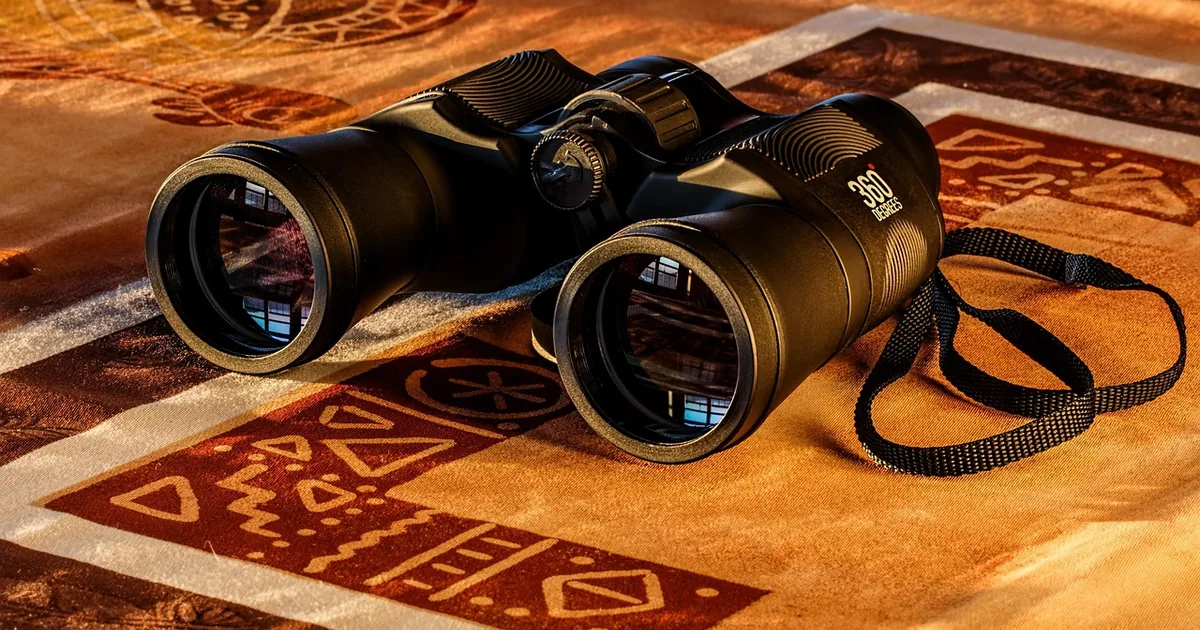
Every binocular listing on OpticsPlanet leads with two numbers, such as 8x42 or 10x25. The first is magnification; the second is the diameter of each front lens in millimetres.
More magnification is not automatically better. At 10x every hand tremor is magnified too, and the field of view narrows, so finding a moving bird gets harder. For general birding and walking, 8x is the easier choice; 10x suits open country, coastlines and distant wildlife.
The objective size controls how much light comes in and how heavy the binocular is. A 42mm pair is the classic all-rounder. A 25mm or 28mm compact fits a jacket pocket but struggles at dusk. A 50mm pair is bright but tiring to carry all day.
Exit pupil, ED glass and waterproofing
Divide the objective by the magnification and you get the exit pupil: 8x42 gives about 5.25mm, 10x25 gives 2.5mm. A bigger exit pupil means a brighter, more forgiving view in low light and an image that is easier to line up with your eyes.
ED, HD or fluorite glass reduces colour fringing around bright edges, such as a dark bird against a pale sky. It adds cost, and on OpticsPlanet you will often see the same brand sell a standard and an ED version side by side. If you watch birds or wildlife seriously, the ED model is the one you will keep.
Look for waterproof and nitrogen or argon purged in the specifications. That keeps rain out and stops the inside of the lenses fogging when you walk from a warm car into cold air. Also check eye relief if you wear glasses; around 15mm or more usually lets you see the full view with spectacles on.
Spotting scopes for birding
A spotting scope is the next step for shorebirds, waterfowl and anything too distant for binoculars. OpticsPlanet lists them by objective size, typically 50mm to around 85mm, with zoom eyepieces such as 20-60x.
Angled bodies are easier to share at different heights and kinder to your neck when looking up. Straight bodies are quicker to aim at a bird. Most birders pick angled.
Budget for a steady tripod. A good scope on a flimsy tripod shakes at high magnification and wastes the glass. Check whether the OpticsPlanet listing includes a tripod or is the scope body only.
Rangefinders for golf and hiking
Golf rangefinders at OpticsPlanet are tuned to lock onto the flag rather than the trees behind it, often with a vibration or visual confirmation. Slope-adjusted models give a plays-as distance on hilly courses, but slope must be switched off for most competitions, so check the model lets you do that.
Hiking and general-purpose rangefinders favour longer maximum range and a readable display in bright light. Read the stated range for reflective versus non-reflective targets; the non-reflective figure is the realistic one for a hillside.
A first telescope and a first microscope
For beginners, OpticsPlanet carries refractors, reflectors and compact tabletop scopes from Celestron and others. Aperture matters more than advertised magnification. Ignore any box that promises hundreds of times power; a 70mm to 130mm scope on a stable mount shows the Moon, the rings of Saturn and the moons of Jupiter well.
A refractor needs almost no maintenance. A reflector gives more aperture for the money but needs occasional collimation. A computerised GoTo mount finds objects for you but adds cost and batteries; a manual mount teaches the sky.
Microscopes on OpticsPlanet range from student compound models to digital and stereo units. A compound microscope looks through slides; a stereo microscope looks at solid objects like insects, coins and circuit boards at lower power. Buy for what the user will actually look at.
Shipping and returns at OpticsPlanet
OpticsPlanet has typically offered free standard shipping on many US orders above a threshold, but the threshold and exclusions change, so check the current terms at checkout. Heavy telescopes and large tripods may ship separately.
Returns are generally accepted on new, unused items in original packaging within a stated window. Keep every box and insert, test the optic promptly, and check the current OpticsPlanet return policy, since some items and opened goods may be treated differently.
Where the OpticsPlanet savings are
Try the 12% code first. On a $400 pair of ED binoculars it is worth about $48, which is real money on a purchase you will keep for years.
The 11% code is the fallback if the first is refused. Some brands enforce minimum advertised pricing, and OpticsPlanet may exclude those products from codes, so enter each code and read the basket total rather than assuming.
The 7% code is a last resort for items the larger codes will not touch. Codes do not stack, so use one per order and compare the final figures.
When buying a telescope or spotting scope with a tripod, put the whole kit in one OpticsPlanet basket so the percentage applies to the full total.
Common questions
Are 8x42 or 10x42 binoculars better from OpticsPlanet?
8x42 for most birding and walking, since it is steadier and brighter. 10x42 for open landscapes and distant subjects.
Is ED glass worth paying for?
If you look at birds against bright sky or water, yes. For occasional use, a good standard OpticsPlanet binocular is fine.
What telescope should a beginner buy at OpticsPlanet?
A 70mm to 130mm refractor or reflector on a stable mount. Avoid anything sold on huge magnification claims.
Do OpticsPlanet codes work on every brand?
Not always. Some brands are excluded, so check the basket total after entering the code.
| Discount | Type | Get the deal |
|---|---|---|
| 12% off | Promo code | View at OpticsPlanet → |
| 11% off | Promo code | View at OpticsPlanet → |
| 10% off | Promo code | View at OpticsPlanet → |
| 5% off | Promo code | View at OpticsPlanet → |